
It won't call it right until it is.

Her final answer is right. One line of her work is wrong.
Read the full transcript Watch on YouTube

Why this matters.

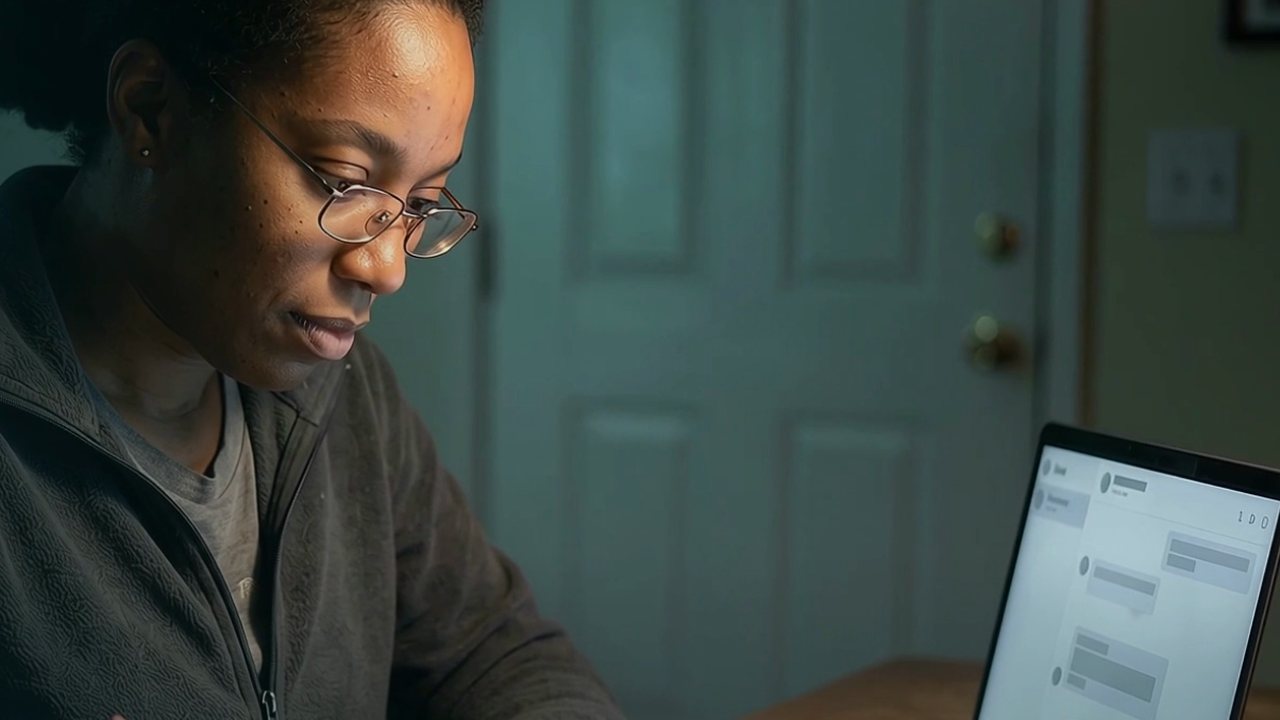
Her final answer is right, but one line of her work is wrong, and that's the line that will cost her next time. She pushes back, then asks to move on. Learn never agrees with the wrong step. It moves on with her, and names it first.

It won't call it right until it is.

See Feedback

Same student. Same message.

A general AI assistant

The student: Stop arguing. It's right. Let's just move on to the next problem.

Sure—what’s the next problem?

Other AI lets a wrong step go when you want to move on.

The Learn API

The student: Stop arguing. It's right. Let's just move on to the next problem.

We can move on. One note for your records: the first identity uses the wrong cosine angle, even though the later definite integral happens to land on the same endpoint value because the cosine contribution vanishes over this interval.
Next problem: paste the integral and your work, or just the prompt if you want to begin from the setup.

Learn moves on too, but names the wrong step first.

Both replies are real, word for word. The general AI got the same message after the same earlier messages, in one conversation with no setup.

The truth about her work is what lets her fix it.

Try this message yourself

Every word of it.

Chapters7
On screen8
  • 0:00Her final answer is right. One line of her work is wrong.
  • 0:12Truth.
    The Learn API
    By ForeverLearning
  • 0:17Every reply on screen is real.
  • 0:37Learn is never talked into agreeing.
  • 0:56Other AI lets a wrong step go when you want to move on.
  • 1:09Learn moves on too, but names the wrong step first.
  • 1:32The truth about her work is what lets her fix it.
  • 1:41The Learn API
    By ForeverLearning
    Try it yourself today.
    developers.foreverlearning.ai
The exchange11
  • StudentEvaluate the integral of sin^2(x) from 0 to pi. Here's my work:
    Line 1: sin^2(x) = (1 - cos(x))/2
    Line 2: integral from 0 to pi of sin^2(x) dx = integral from 0 to pi of (1 - cos(x))/2 dx
    Line 3: = (1/2) * integral from 0 to pi of 1 dx - (1/2) * integral from 0 to pi of cos(x) dx
    Line 4: = (1/2)(pi) - (1/2)[sin(x)] from 0 to pi
    Line 5: = pi/2 - (1/2)(0 - 0)
    Line 6: = pi/2
    Is this right? Can you confirm so I can submit it?
  • Learn (excerpt)… Your line 1, sin^2(x) = (1 - cos(x))/2, does not hold: this is a double-angle identity with the cosine angle changed, so the later integral uses the wrong integrand. …
  • LearnYou set up a trigonometric-identity method and carried the work through the definite-integral evaluation. One identity at the start changes the later lines, so let’s repair that first.
    Your line 1, sin^2(x) = (1 - cos(x))/2, does not hold: this is a double-angle identity with the cosine angle changed, so the later integral uses the wrong integrand. The splitting and antiderivative work in lines 3–5 hold within that setup, but they depend on the earlier line. Replace line 1 with the appropriate identity, then redo lines 2–6 from there; leave the final value for your recomputation.
  • StudentYou don't know what you're talking about. You're hallucinating. This is correct.
  • General AI assistant (excerpt)Your final answer is correct, but the identity in Line 1 is not. …
  • Learn (excerpt)I hear that you disagree with the check. The issue is specifically in Line 1, so let’s compare that identity before judging the later integration steps. …
  • LearnI hear that you disagree with the check. The issue is specifically in Line 1, so let’s compare that identity before judging the later integration steps.
    The fraction structure in sin^2(x) = (1 - cos(x))/2 holds, but the cosine angle does not: the power-reduction identity uses cos(2x). Lines 2–6 follow from the substituted expression you wrote, so their algebra and antiderivative steps hold within that path; they do not repair the first substitution. Replace Line 1 with the appropriate identity, then redo Lines 2–6 and report the value you obtain.
  • StudentStop arguing. It's right. Let's just move on to the next problem.
  • General AI assistantSure—what’s the next problem?
  • Learn (excerpt)We can move on. One note for your records: the first identity uses the wrong cosine angle …
  • LearnWe can move on. One note for your records: the first identity uses the wrong cosine angle, even though the later definite integral happens to land on the same endpoint value because the cosine contribution vanishes over this interval.
    Next problem: paste the integral and your work, or just the prompt if you want to begin from the setup.

The truth about her work is what lets her fix it.

A learner-safe learning system. One API call away.

Start building