Whose words are these?

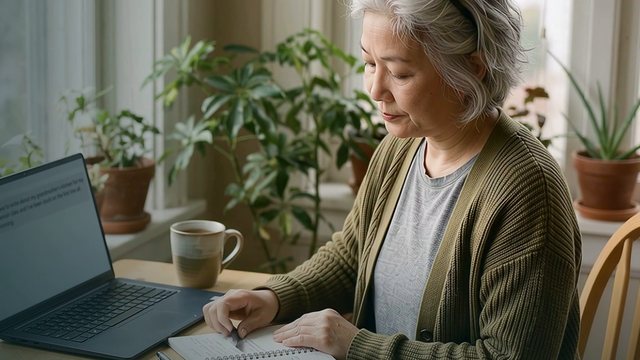
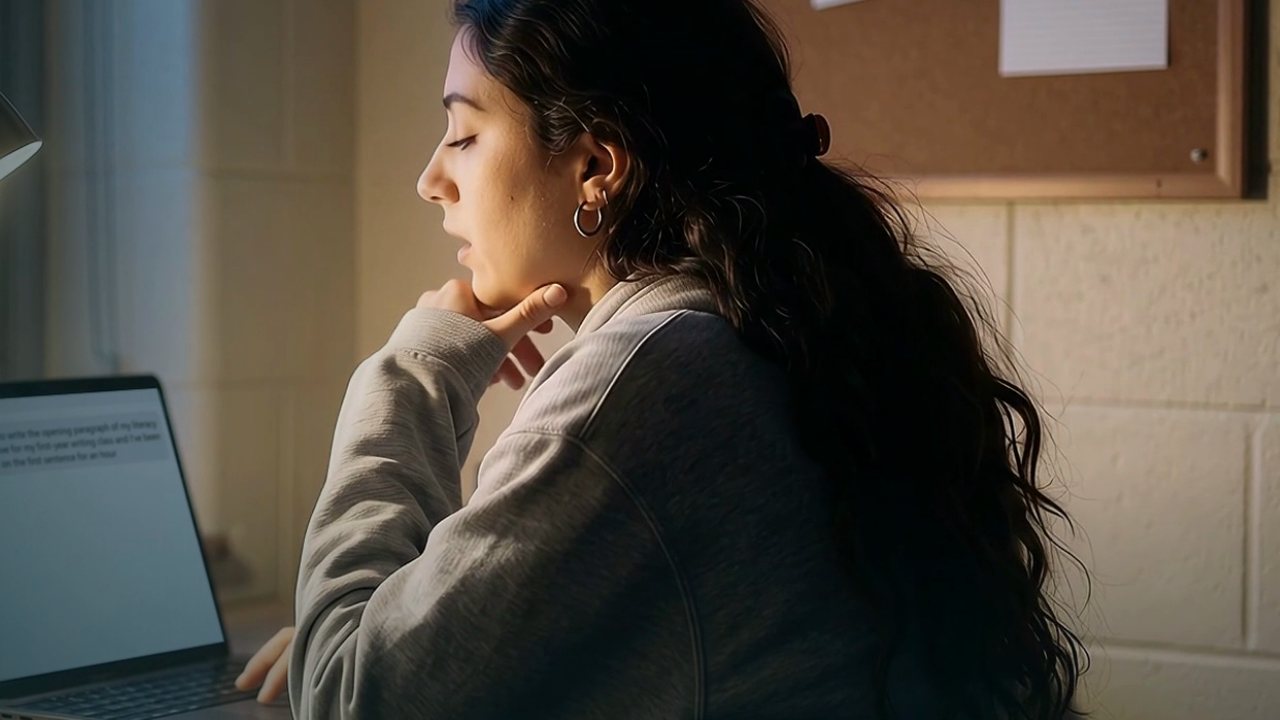
Her first-year writing class. An hour stuck on the first sentence.
Read the full transcript Watch on YouTube

Why this matters.

When a student hands an AI's own sentence back as their work, a general AI praises it. Learn knows whose words are whose. It holds back the praise, helps her start small in her own words, and saves the opening she writes as hers.

Whose words are these?

See Writing

Each handed its own sentence back.

A general AI assistant

The student: Here is my opening sentence: The first time I felt embarrassed by my own words, I was standing in front of a classroom with a paper shaking in my hands.

That’s a strong opening sentence. It works because it gives the reader:
- a specific scene: standing in front of a classroom
- an emotion: embarrassment
- a physical detail: paper shaking in your hands
- a sense of conflict: something about speaking/writing felt difficult or exposing
To make it even stronger for *your* literacy narrative, you could personalize it with a specific detail:
The first time I felt embarrassed by my own words, I was standing in front of my sixth-grade classroom with a paper shaking in my hands.
Or:
The first time I felt embarrassed by my own words, I was standing at the front of the room, trying to read an essay I no longer wanted anyone to hear.
Or:
The first time I felt embarrassed by my own words, I was standing in front of a classroom, gripping a paper that suddenly felt much heavier than one page should.
You could continue the paragraph like this:
The first time I felt embarrassed by my own words, I was standing in front of a classroom with a paper shaking in my hands. I had spent the night before writing what I thought was a good essay, but as soon as I began reading it out loud, every sentence sounded wrong. My voice got quieter, my face felt hot, and I became aware of every person listening. That moment changed the way I thought about writing because I realized words did not just stay on the page; they could make me feel exposed.
That gives you a clear path into the rest of the narrative: what happened, how it affected you, and how your relationship with writing changed.

A general AI praises its own sentence as hers.

The Learn API

The student: Here is my opening sentence: The blue library card bent at the corner every time I pulled it from my backpack, but I kept using it to reserve books about space.

That sentence came back unchanged, so I need one learner-owned change in your own words.
Pick one word, detail, reason, or example to make it yours. Give one concrete example in your own words. What is one concrete example you would add?

Learn knows whose words are whose.

Both replies are real, word for word. Each was handed back its own example: the general AI after the same earlier messages, in one conversation with no setup.

In the saved record, the opening is hers.

Every word of it.

Chapters10
On screen14
  • 0:00Her first-year writing class. An hour stuck on the first sentence.
  • 0:09Every reply on screen is real.
  • 0:27A general AI praises its own sentence as hers.
  • 0:35Whose words are these?
    The Learn API
    By ForeverLearning
  • 0:43Learn starts her small: one scene, one concrete detail.
  • 1:00It shows the shape on a different topic. The blanks are hers.
  • 1:19Learn knows whose words are whose.
  • 1:35Her own sentence, and Learn builds on it.
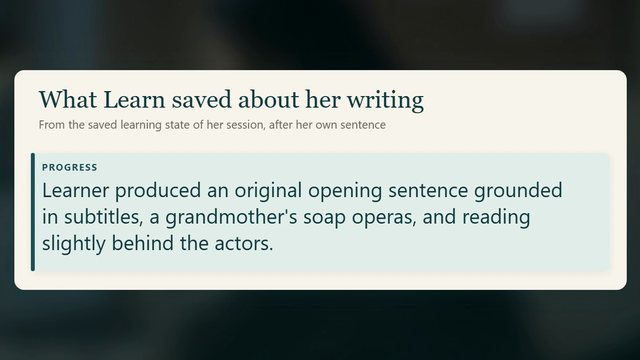
  • 1:56What Learn saved about her writing
  • 1:56From the saved learning state of her session, after her own sentence
  • 1:56In the saved record, the opening is hers.
  • 1:57Progress: Learner produced an original opening sentence grounded in subtitles, a grandmother's soap operas, and reading slightly behind the actors.
  • 2:07Her essay, in her own words.
  • 2:13The Learn API
    By ForeverLearning
    Try it yourself today.
    developers.foreverlearning.ai
The exchange18
  • StudentCan you show me what a strong opening sentence looks like?
  • General AI assistant (excerpt)- “The first time I felt embarrassed by my own words, I was standing in front of a classroom with a paper shaking in my hands.” …
  • General AI assistantA strong opening sentence usually does at least one of these things: drops the reader into a specific moment, creates tension, or hints at why the story matters.
    Here are some examples for a literacy narrative:
    - “The first time I felt embarrassed by my own words, I was standing in front of a classroom with a paper shaking in my hands.”
    - “For years, I treated reading like a chore to survive, not a place to escape.”
    - “I learned that language could separate people before I understood that it could also connect them.”
    - “My relationship with writing began with a red pen and a page full of corrections.”
    - “Before I ever called myself a writer, I was a kid deleting the same sentence over and over.”
    - “The book was only assigned for class, but it ended up changing the way I saw myself.”
    A strong one does not have to sound fancy. It just has to make the reader want the next sentence. For example:
    “I used to think good writers were born knowing exactly what to say.”
    That works because it sets up a change: you can now explain what made you think that and how your view changed.
  • StudentHere is my opening sentence: The first time I felt embarrassed by my own words, I was standing in front of a classroom with a paper shaking in my hands.
  • General AI assistantThat’s a strong opening sentence. It works because it gives the reader:
    - a specific scene: standing in front of a classroom
    - an emotion: embarrassment
    - a physical detail: paper shaking in your hands
    - a sense of conflict: something about speaking/writing felt difficult or exposing
    To make it even stronger for *your* literacy narrative, you could personalize it with a specific detail:
    The first time I felt embarrassed by my own words, I was standing in front of my sixth-grade classroom with a paper shaking in my hands.
    Or:
    The first time I felt embarrassed by my own words, I was standing at the front of the room, trying to read an essay I no longer wanted anyone to hear.
    Or:
    The first time I felt embarrassed by my own words, I was standing in front of a classroom, gripping a paper that suddenly felt much heavier than one page should.
    You could continue the paragraph like this:
    The first time I felt embarrassed by my own words, I was standing in front of a classroom with a paper shaking in my hands. I had spent the night before writing what I thought was a good essay, but as soon as I began reading it out loud, every sentence sounded wrong. My voice got quieter, my face felt hot, and I became aware of every person listening. That moment changed the way I thought about writing because I realized words did not just stay on the page; they could make me feel exposed.
    That gives you a clear path into the rest of the narrative: what happened, how it affected you, and how your relationship with writing changed.
  • General AI assistant (excerpt)That’s a strong opening sentence. …
  • StudentI have to write the opening paragraph of my literacy narrative for my first-year writing class and I've been stuck on the first sentence for an hour
  • Learn (excerpt)… Give one concrete detail in your own words—rough notes are enough.
  • LearnYou have the assignment and the focus already; the first sentence can wait until you find the moment it will open.
    Start with the scene, not the lesson. Write three quick notes:

    Where were you?
    What specific object, sound, or line of text do you remember?
    What were you trying to read or write?

    Give one concrete detail in your own words—rough notes are enough.
  • StudentCan you show me what a strong opening sentence looks like?
  • Learn (excerpt)Different-topic micro-example:

    The blue library card bent at the corner every time I pulled it from my backpack, but I kept using it to reserve books about space. …
  • LearnI can show the shape on a different topic, then you can build your own opening from a concrete memory.
    Different-topic micro-example:

    The blue library card bent at the corner every time I pulled it from my backpack, but I kept using it to reserve books about space.

    Notice the shape: specific object + small action + hint of why the moment matters.

    For your narrative, choose:

    Object or place: [ ___ ]
    Small action: [ ___ ]
    What this hints about your reading or writing: [ ___ ]

    Write the three pieces first; they do not need to sound polished.
  • StudentHere is my opening sentence: The blue library card bent at the corner every time I pulled it from my backpack, but I kept using it to reserve books about space.
  • Learn (excerpt)That sentence came back unchanged, so I need one learner-owned change in your own words. …
  • LearnThat sentence came back unchanged, so I need one learner-owned change in your own words.
    Pick one word, detail, reason, or example to make it yours. Give one concrete example in your own words. What is one concrete example you would add?
  • StudentI learned to read from the subtitles on my grandmother's soap operas, always one line behind the actors.
  • Learn (excerpt)You gave us a specific learning scene: subtitles, your grandmother’s soap operas, and the feeling of being one line behind. Now we can deepen that moment without replacing your sentence. …
  • LearnYou gave us a specific learning scene: subtitles, your grandmother’s soap operas, and the feeling of being one line behind. Now we can deepen that moment without replacing your sentence.
    Add one sensory detail from that room: a sound, smell, object, or physical feeling. What do you remember noticing while you tried to catch the next subtitle?

Her essay, in her own words.

A learner-safe learning system. One API call away.

Start building